Keep Pets Safe, Not Stressed, on the Fourth of July: How to Protect Your Furry Friends on the Loudest Day of the Year
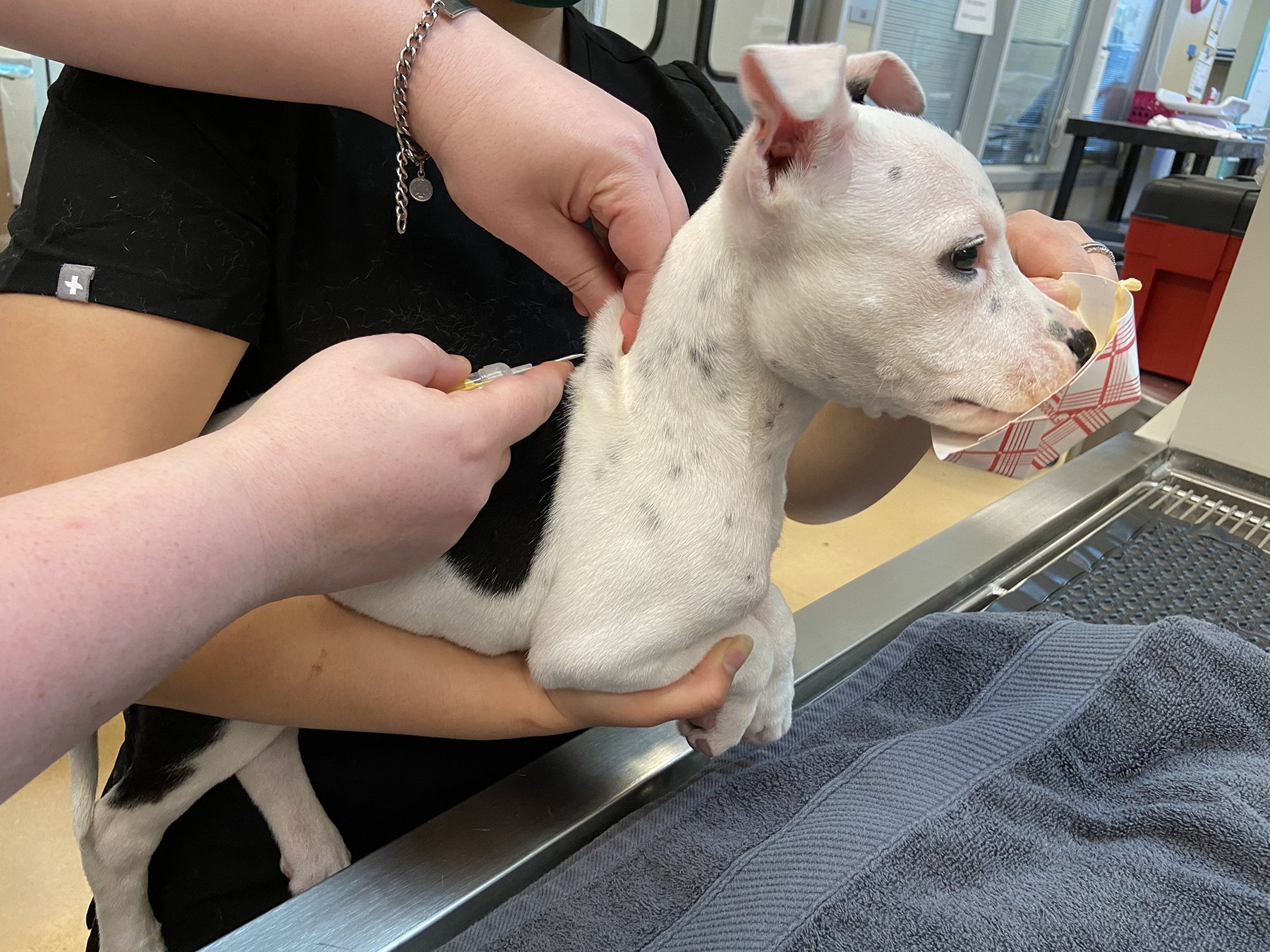
Microchip implants are a way to help your dog return home if they ever get lost. photo: HSSV
Humans love the Fourth of July — the barbecues, the fireworks, the time off from work. For us, it's a happy holiday.
For pets, though, it's Scary Things Booming and Blowing Up Day. The ground shakes. The sky explodes. The air smells like smoke.
Since we can't explain American history to animals, the Fourth of July is a terrifying time for them. In fact, in most shelters across the country, July 5 is the busiest day of the year. They’re all jammed with pets who became terrified and made a run for it.
Here are some simple tips to keep everyone safer on the Fourth.
Prepare Your Pet
Dress 'Em Up. No, not in a silly costume — in a collar with a tag on it. All pets, dogs and cats both, should have identification. Make sure the ID tag has your name and your current phone number on it. Even if your pet does have a chip, a visible ID tag can spare them a trip to the shelter or vet to get scanned.
If your pet has a microchip, check with the microchip company to make sure they have your current contact information and address. If you're unsure how to reach your microchip company, you can look it up by the microchip number here. Not chipped yet? Head over to the Humane Society Silicon Valley Medical Center or call your local veterinarian.
Lock 'Em Down. Pets need to be inside when things start exploding. Ideally, they should be in a familiar environment with supervision. Never leave dogs or cats outside on the Fourth. No matter how secure it seems, animals can escape outside enclosures or hurt themselves trying. Even cats who have always returned dependably from outdoors may easily be startled by the July 4 commotion and find themselves lost in a strange area. Scared animals run.
If You Find A Lost Pet
Before you bring an animal to a shelter, first try to locate the owner. Never assume an animal is abandoned or dumped. If the pet is wearing an identification tag, call the owner and reunite. No leads? Start knocking on doors and asking neighbors. Pets are often found close to home. For dogs, walking them around the neighborhood and asking if anyone recognizes them may help get them home more quickly.
If you can’t locate the owner on your own, a found animal should go to the shelter that serves the city where you found them. Bay Woof’s list of Bay Area shelters is here.
While many shelters will be closed to the public on July Fourth, some will have animal control or public safety officers on duty to pick up lost pets. Here's a partial list of area shelters to call depending on where you found an animal. If you’re outside these areas, you should be able to find your local shelter through a quick internet search.
Sunnyvale
Humane Society Silicon Valley. Accepts only stray animals from the city of Sunnyvale. Open July 4, 9 am-6 pm, for lost tours, reclaims, and missing pet advice. 408-262-2133 x 110.
Sunnyvale Animal Control
408-730-7178
Campbell, Monte Sereno, Santa Clara, and Mountain View
Silicon Valley Animal Control Authority
408-764-0344
San Jose, Cupertino, Los Gatos, Milpitas, and Saratoga
San Jose Animal Care Center
408-794-7297
Palo Alto, Los Altos, and Los Altos Hills
Palo Alto Animal Control/Pets In Need
650-496-5971
Gilroy, San Martin, Morgan Hill, and Unincorporated Santa Clara County
Santa Clara County Animal Shelter - South County
408-686-3900
San Mateo County
Peninsula Humane Society & SPCA
650-340-8200
Santa Cruz County
Santa Cruz County Animal Services
831-454-7303
If You Lose Your Pet
Start looking sooner, not later! Don't assume your pet will find its own way home. Knock on neighbors’ doors and ask. Look under porches and cars for cats; when scared, many cats will hunker down and hide. Look in nooks and crannies in your neighborhood. Check garages and enclosed areas that might have been open long enough for a frightened animal to run inside. Go to your local animal shelter, file a lost report, and search through animals there. Post fliers and put out an alert on your neighborhood listserv if you have one.
Remember, your pets depend on you to keep them safe. A few common-sense precautions on the Fourth can make the difference between heartbreak and a happy holiday for everyone.